Mangal Shobhajatra: An Innovation of Charupith

An innovation of Charupith, the Mangal Shobhajatra rally on the occasion of the Bengali New Year has successfully united urban and rural traditions and is today a celebrated national event.

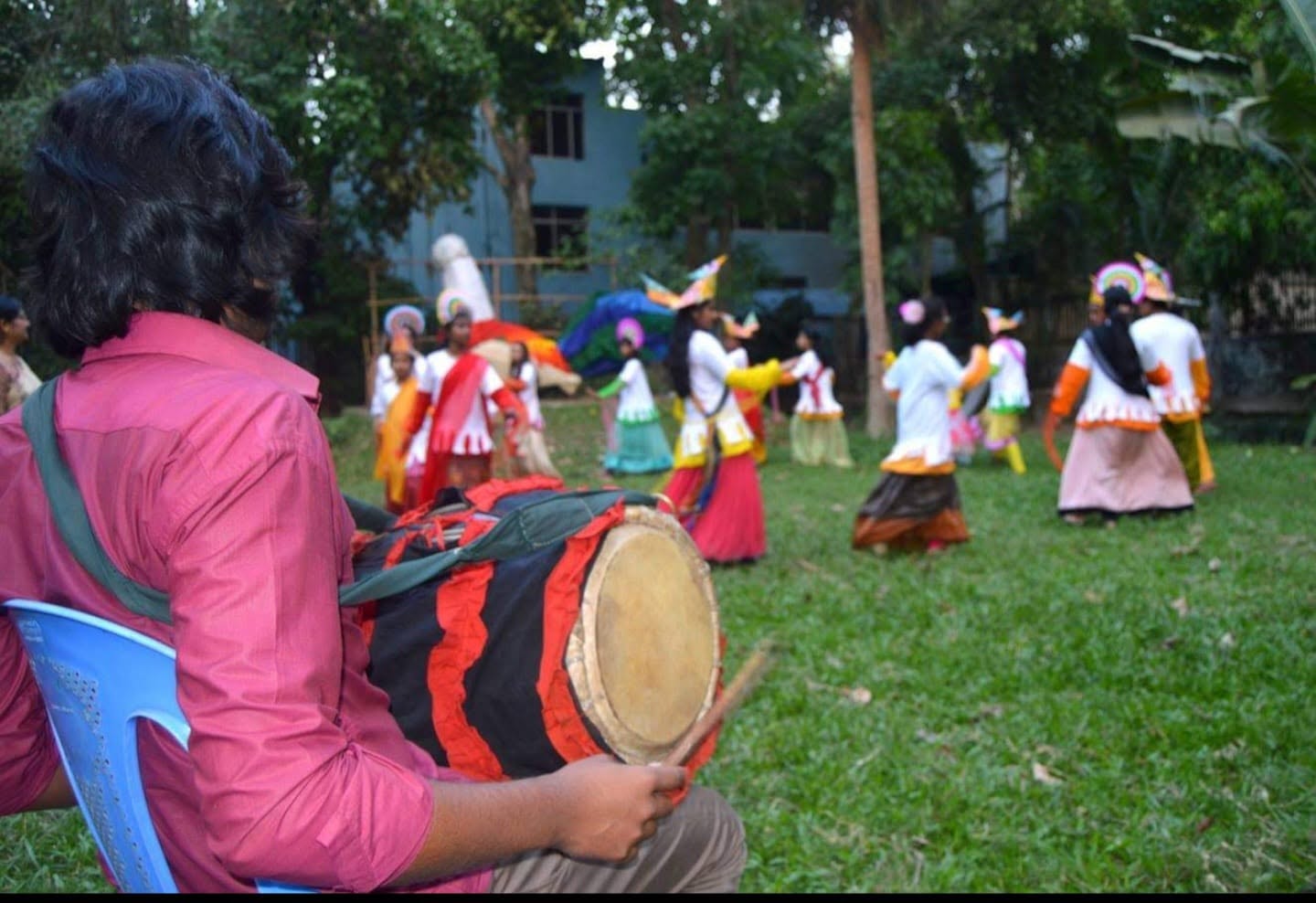
“In 1985, we sought to infuse the rebellion and emotion of the Language Movement’s ‘Prabhat Feri’ with the absolute colors of our country’s folk heritage. Moving to the ecstatic beats of dholes, shanais, and cymbals, we resurrected the forgotten artistic elements of rural Bengal to craft the first-ever New Year procession. Our dream was to decentralize art and transform this local pulse into a grand national festival.”
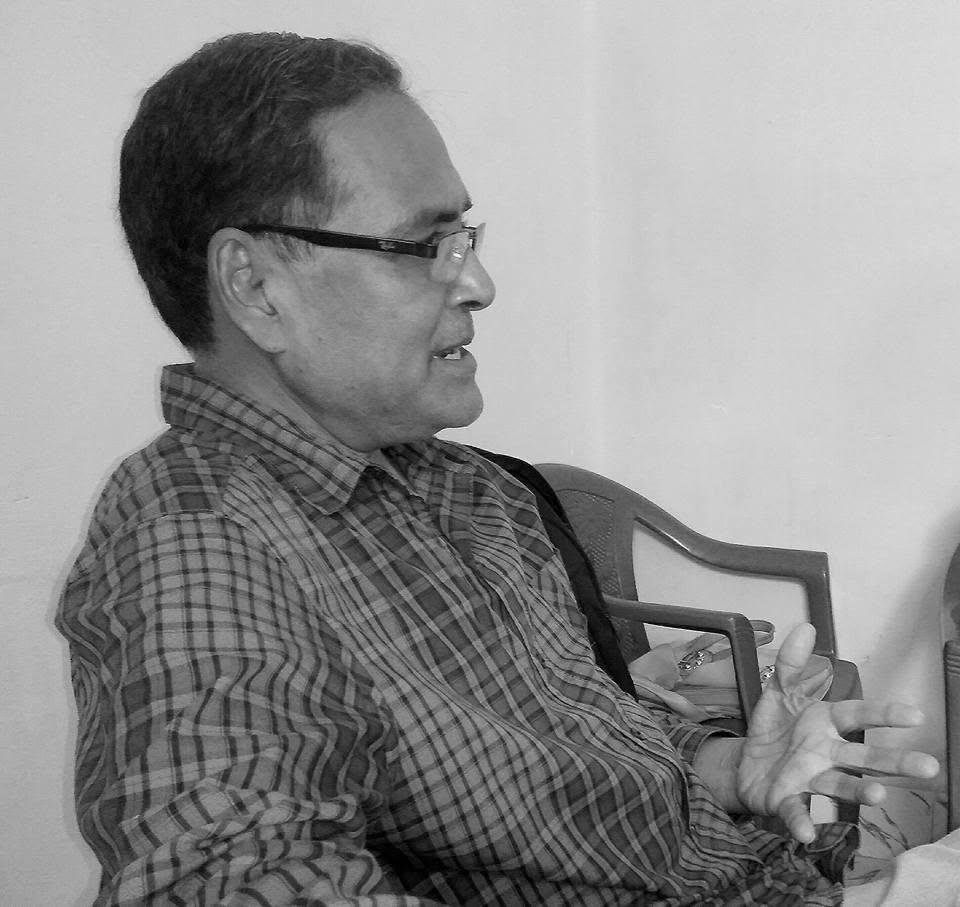
Sculptor Mahbub Jamal Shamim

Mangal Shobhajatra

The Origin and Philosophy of Mangal Shobhajatra

The Genesis: Pohela Boishakh, 1393 Bangabda

It was 6:00 AM on the first day of the Bengali New Year in 1985 (1393 Bangabda). A historic colorful procession marched from the Old College premises of Jashore. Rooted in secular ideals and deep folk heritage, this very rally laid the foundation for what is now globally celebrated as “Mangal Shobhajatra.”

The Story of Creation (In the Words of the Pioneers)

On February 21, 1985, after returning from the Ekushey Prabhat Feri (the language movement rally), sculptor Mahbub Jamal Shamim and painter Hiranmay Chanda initiated a historic workshop. They gathered the artists’ team and young children of Charupith Art Research Institute to design the country’s first-ever New Year procession.

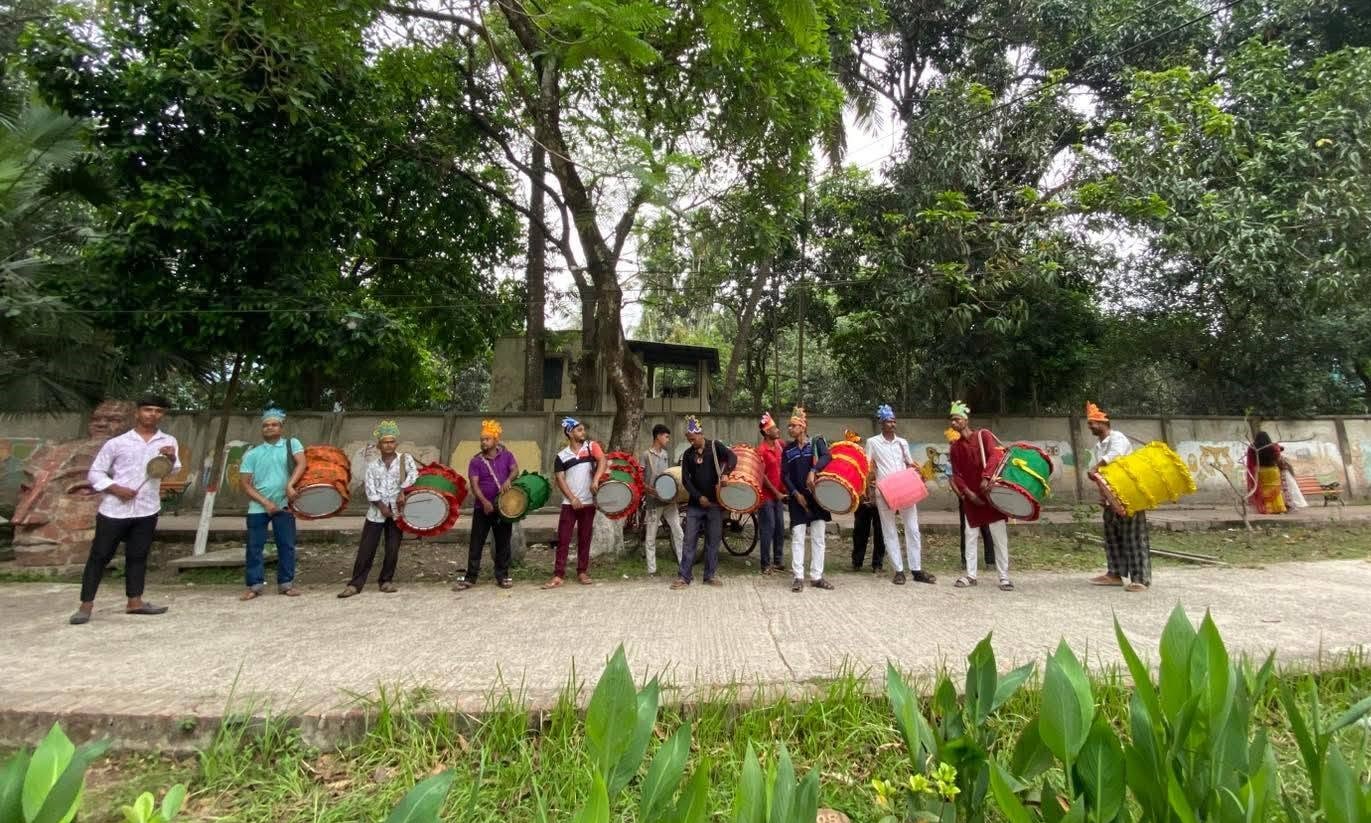
The core idea was to blend the community spirit of the February 21st rally with the absolute colors of traditional Bengali heritage. Moving to the ecstatic beats of dholes, shanais, and brass cymbals, they resurrected the forgotten artistic elements of rural Bengal. 

The vision was profound-to decentralize art and transform this local celebration into a grand national festival.

The Eternal Stream of the Ever-New (The Theme of 1434)

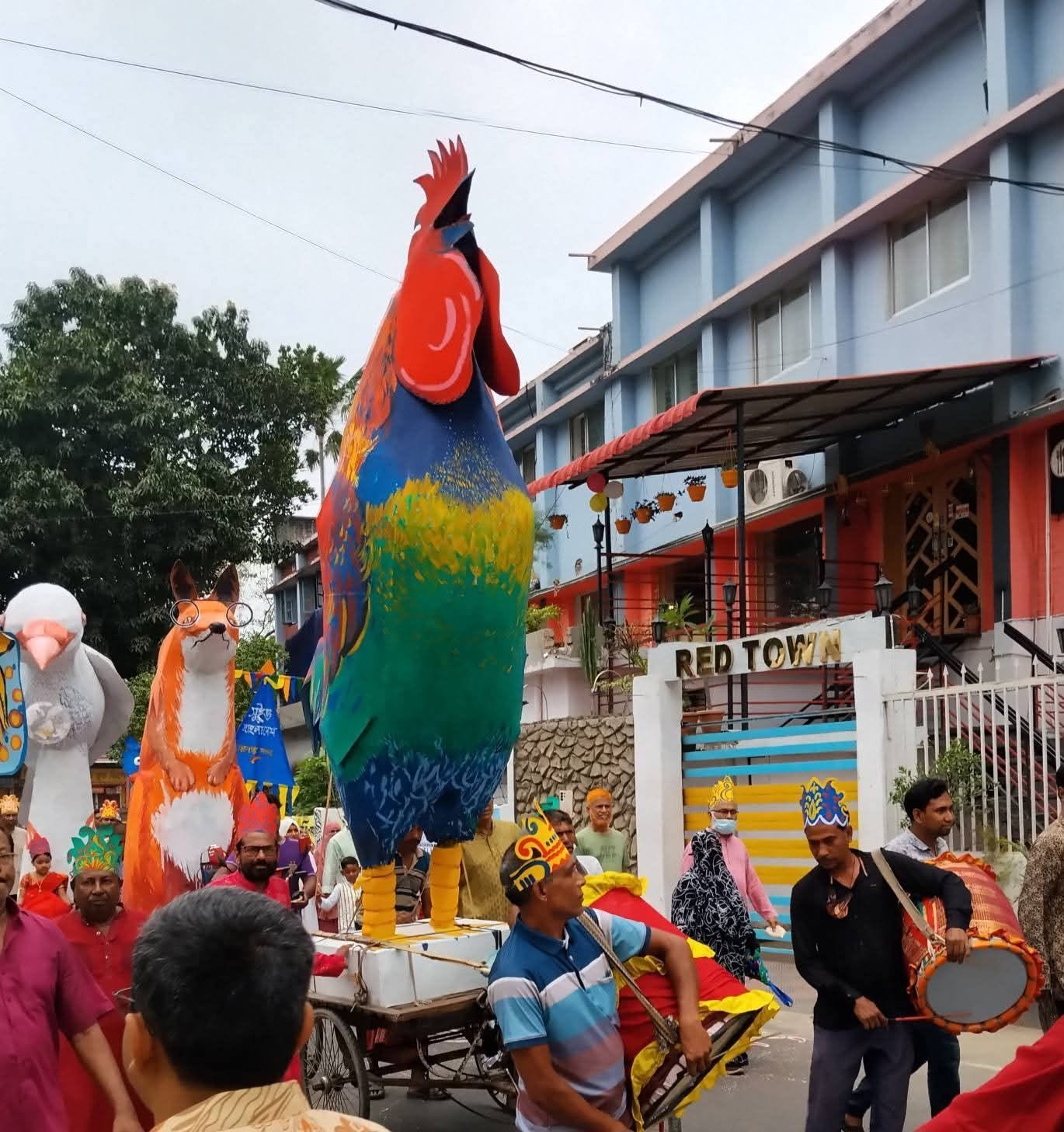
As the new year 1434 knocks on our doors, the central concept for Jashore’s rally this year is: “Nityanutoner Amrito Dhara” (The Eternal Stream of the Ever-New).

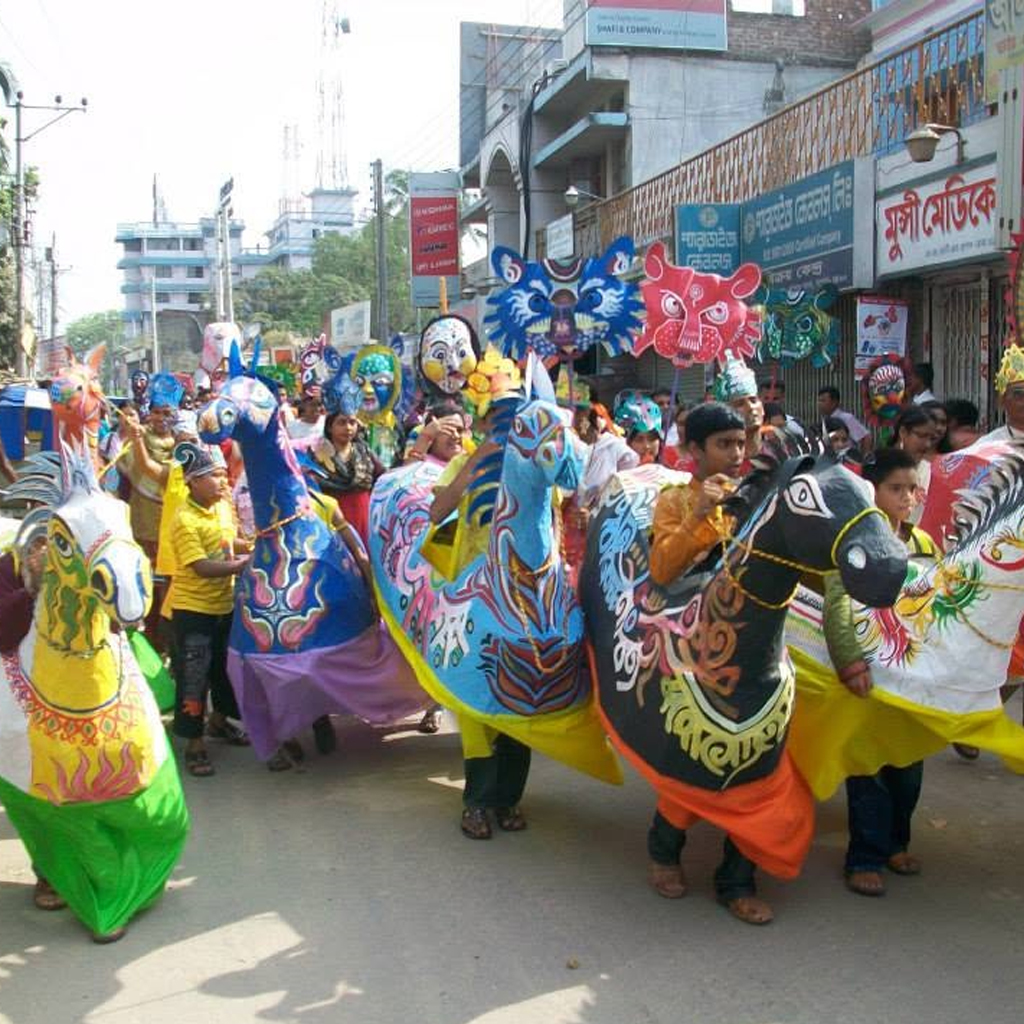
Every year, this festival triggers a joyous wave of artistic practice across the nation. For a month, young students and art enthusiasts dive into creating colorful masks, structures, and folk motifs. On the morning of Pohela Boishakh, this magnificent reflection of Bengali heritage shines on the mirror of the global sky, presenting a vibrant, progressive Bangladesh to the center stage of the world.

We Are All Actors, We Are All Artists

This grand festival of creativity awakens the inner child of everyone—young and old alike. It breaks the shackles of sorrow, pain, and stagnation, turning us into open-hearted celebrating souls. In this festival, we are the actors, we are the dancers, and we are the audience. Today, everyone is an artist, marching alongside the historical creative souls of our land to shape the future.

Why This Folk Festival Reached the Urban Spaces

For thousands of years, the elite, feudal, and colonial rulers suppressed the artistic voice of the subaltern. Yet, our rural artisans kept our heritage alive, pouring colors, shape, and life into everyday utensils, furniture, traditional clothing, and children’s toys. Though they were the true trendsetters of our taste, the urban centers marginalized them.

Today, we proudly embrace this country craft nurtured by 95% of our neglected rural population. That lively stream of folk culture has broken through the concrete of modern cities, transforming into the majestic river known as “Mangal Shobhajatra”—flowing proudly to merge with the ocean of global civilization.

Our Vision: Diversity and Inclusivity

We will continue to recreate Mangal Shobhajatra with newer aesthetics and flavors. Nourished by our roots and adapted to the imagination of the new generation, Bengali culture will flow infinitely. We envision that every geographical region of Bangladesh should shape its own unique style of Mangal Shobhajatra. This regional diversity will celebrate our distinct cultural identities and open hundreds of doors for cultural tourism.

Artistic Impact

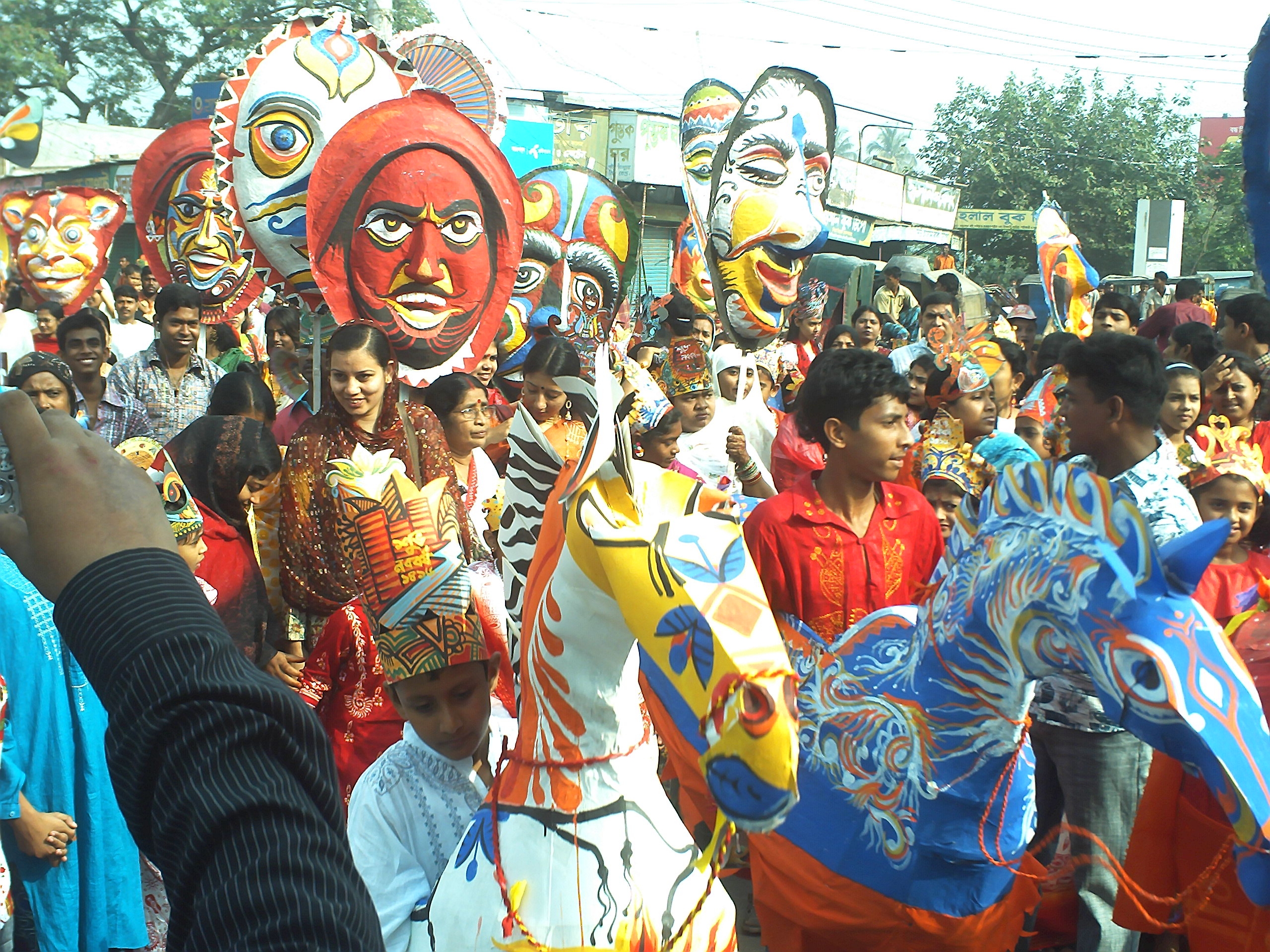
The festival has gradually become recognized as a form of art at the national level. Masks, crowns, traditional dolls, designs, music, dance and humor presents Bengali culture in all its majesty.

Cultural Unity

Rooted in the colorful life of villagers, this mega event unites urban and rural traditions involving Hindu, Buddhist, Muslim, Christian and the diverse people of Bengal.

Mangal Shobhajatra

Vibrant procession celebrating unity, culture, and hope in Bangladesh.

Join Us

Be part of Mangal Shobhajatra’s vibrant tradition celebrating unity and hope.

Get in Touch